Добро пожаловать в Shandong Hongfan Power Technology Co.,Ltd
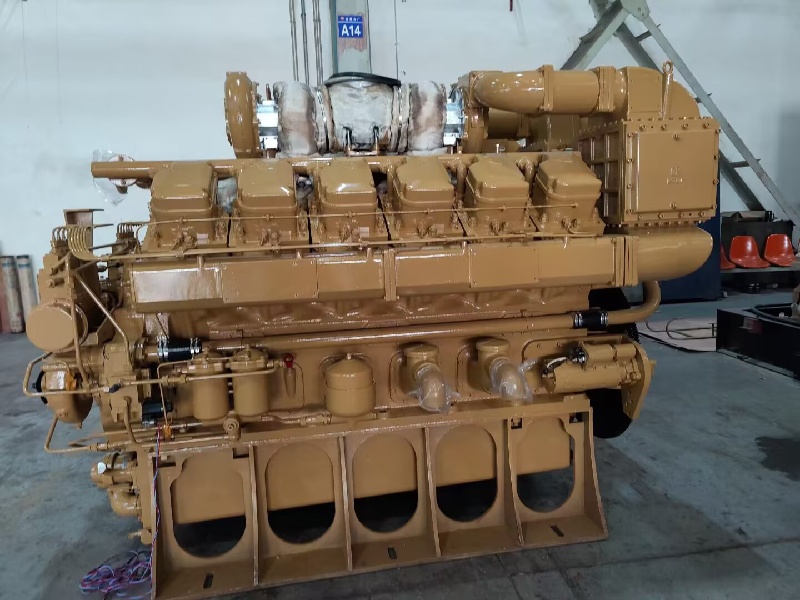
Топливный насос высокого давления дизельного двигателя G12V190PZL: конструкция, техническое обслужив
The fuel injection pump is one of the most critical components in a diesel engine, directly affecting engine performance, fuel efficiency, and operational reliability. In this guide, we’ll break down the Z-type and P9-type fuel injection pumps, along with their structure, maintenance practices, and transmission system—based on the 190 series diesel engine.
Z-Type Fuel Injection Pump: Structure and Features
The Z-type fuel injection pump is a plunger-type compound pump with a split-body design.
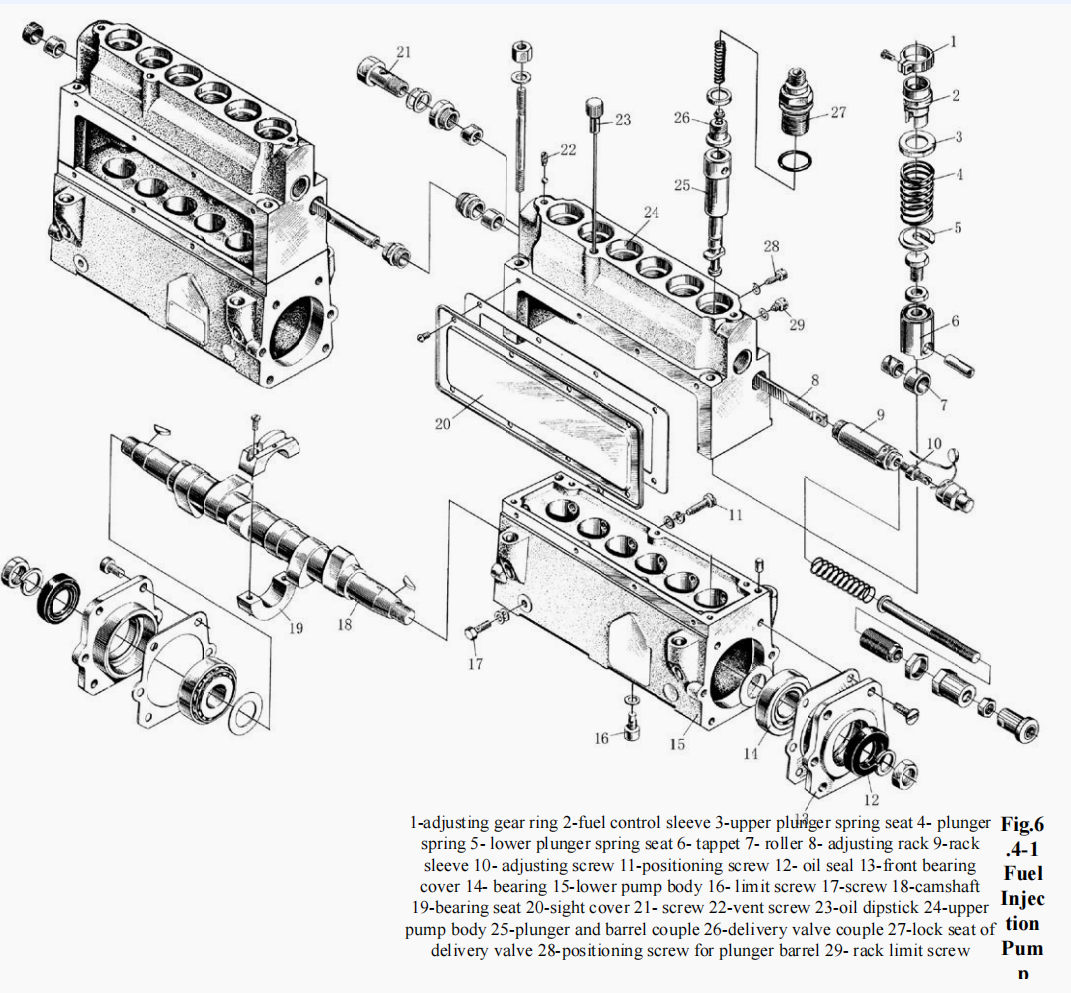
Operation and Maintenance of Z-Type Fuel Injection Pump
Proper maintenance is essential for long service life and optimal engine performance.
1. Use Clean, Filtered Fuel
Fuel entering the pump must be strictly filtered to prevent wear and blockage.
2. Regularly Check Injection Timing and Fuel Quantity
Ensure the fuel feed advance angle is within specification
Maintain uniform fuel delivery to all cylinders
3. Maintain Proper Lubrication
Check oil level and quality regularly
Replace or refill oil when necessary
Keep oil level within dipstick markings
4. Ensure Smooth Movement of Components
Inspect:
Adjusting rack
Plunger assembly
Camshaft
These parts must move freely without sticking.
5. Avoid Water Contamination 🚫
Never wash the pump with water
Keep covers sealed
Lubricate components to prevent rust and corrosion
6. Air Bleeding Before Startup
After long downtime:
Loosen vent screws
Allow fuel to flow until no bubbles appear
Tighten screws
7. Do Not Tamper with Adjustments
Fuel limiter and rack linkage are factory sealed
Unauthorized adjustment is strictly prohibited
Adjustment and Inspection Guidelines
The injection pump is a precision assembly
Must be tested on a specialized test bench
Never adjust based solely on exhaust temperature
Disassembly should only be performed by trained professionals
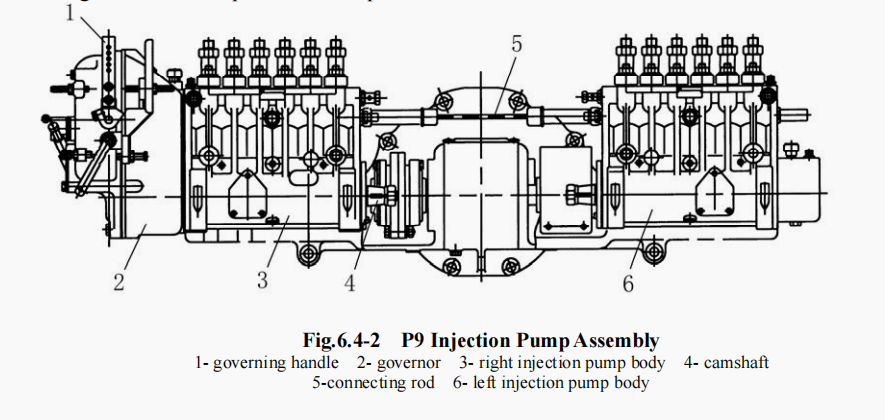
P9-Type Fuel Injection Pump Overview
The P9 fuel injection pump is commonly used in V-type engines (e.g., 12V engines).
Key Features:
Dual pump configuration (left and right)
Equipped with RSUV(Z) speed governor
Fully enclosed pump body
Suspended plunger sleeve structure
Functional Advantages:
Adjustable fuel quantity balance between cylinders
Injection timing can be fine-tuned using gaskets
Optimized for efficient cam profile operation
⚠️ Important Note:
Different engine speeds require different pump types. Never interchange components randomly.
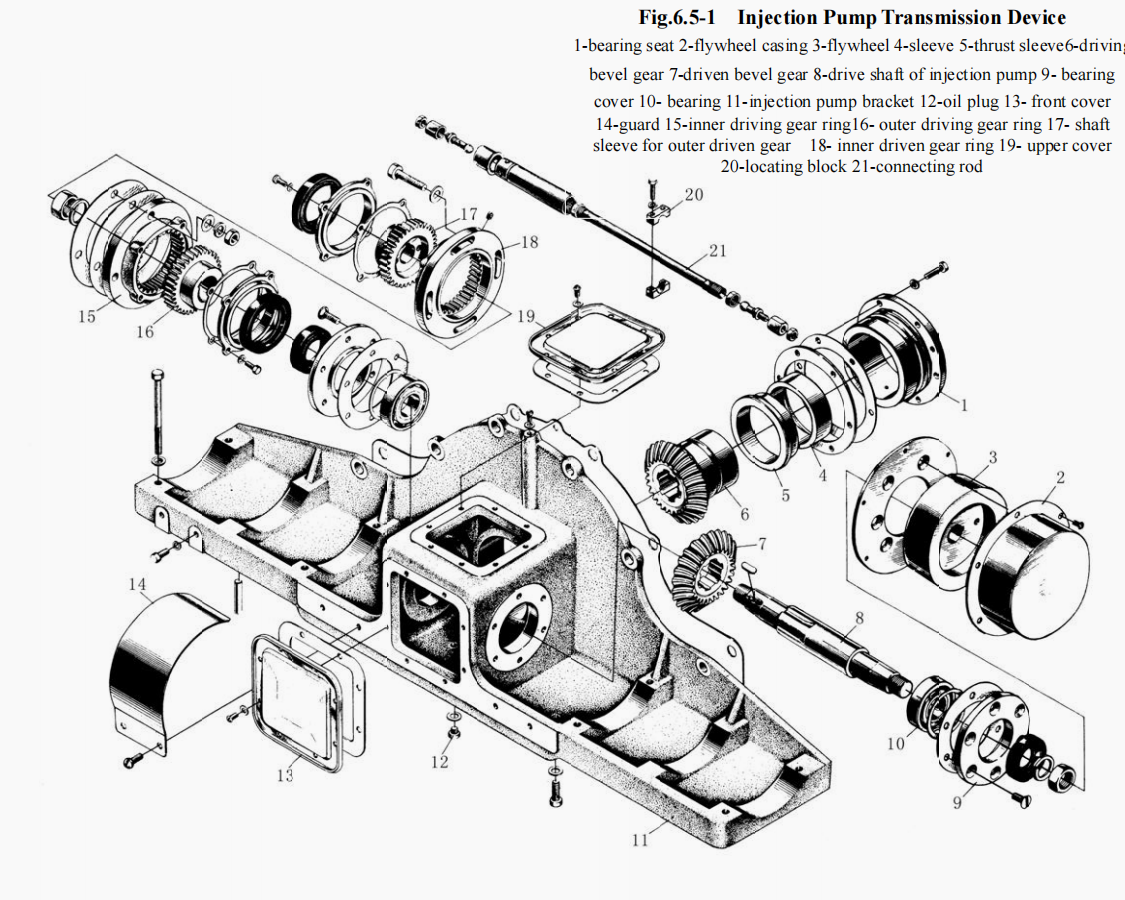
Injection Pump Transmission Device
Maintenance of Transmission Device
Keep It Clean
Located outside the engine → prone to contamination
Do not clean with water to avoid rust and damage
Check Fasteners Regularly
Loose bolts can alter injection timing
Lubrication Requirements
Use MOS₂ grease or No.3 lithium grease
Lubricate every 250 operating hours
Disassembly Procedure (Simplified)
Remove protective cover
Disconnect coupling bolts
Remove injection pump
Open gearbox covers
Extract:
Bearings
Oil seals
Drive shaft
Bevel gears
Remove pump bracket
Inspection Checklist
After cleaning components, inspect for:
Gear wear, cracks, or broken teeth
Bearing scuffing or overheating
Oil seal aging or leakage
Replace damaged parts immediately.
Reassembly Guidelines
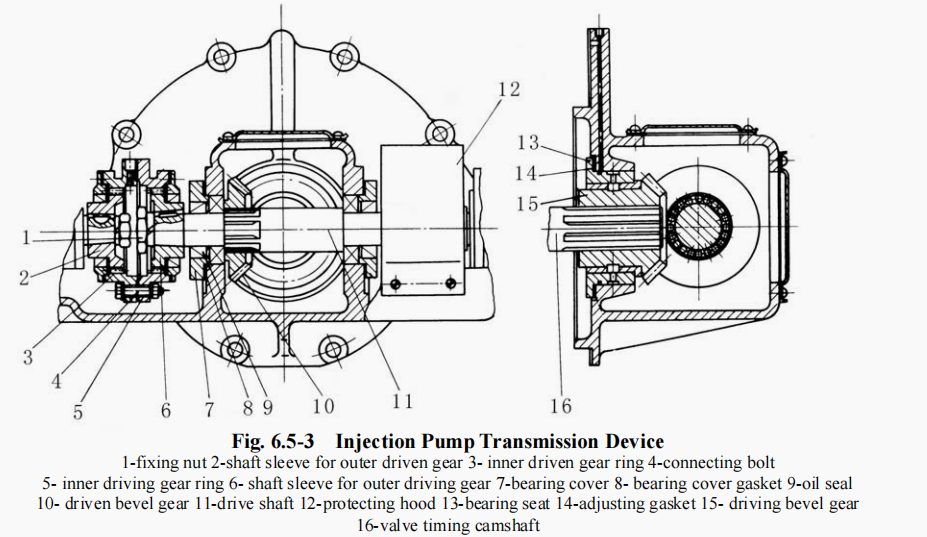
1. Align Timing Marks Precisely
All components marked with “0” must be aligned:
Camshaft and driving gear
Driving and driven bevel gears
Gear coupling rings
Incorrect alignment will cause improper fuel timing.
2. Maintain Proper Clearances
| Component | Clearance |
|---|---|
| Drive shaft axial clearance | 0.1–0.3 mm |
| Gear backlash | 0.15–0.30 mm |
| Coupling sleeve clearance | 0.5–1.0 mm |
3. Final Steps
Reassemble in reverse order
Verify alignment and fit
Fill grease into gear coupling
Common Problems and Solutions
Uneven Fuel Supply
Cause: Incorrect adjustment or worn plunger
Solution: Recalibrate on test bench
Hard Starting
Cause: Air in fuel system
Solution: Bleed air from pump
Abnormal Noise
Cause: Gear wear or improper clearance
Solution: Inspect and replace damaged parts
Conclusion
The fuel injection pump in 190 series diesel engines is a highly precise and essential component. Proper maintenance—including clean fuel usage, correct lubrication, and accurate timing alignment—ensures:
Improved engine efficiency
Longer service life
Stable and reliable operation
For best results, always follow manufacturer guidelines and rely on trained technicians for inspection and adjustment.
Популярные товары
Последние новости

Авторское право ©2024 Все права защищены Shandong Hongfan Power Technology Co.,Ltd