Добро пожаловать в Shandong Hongfan Power Technology Co.,Ltd
Weichai Baudouin Diesel Engine Cylinder Head Disassembly, Inspection and Maintenance Guide
The cylinder head is one of the most critical components of a diesel engine. Its condition directly affects engine power, fuel efficiency, reliability and overall service life. Proper cylinder head disassembly, inspection, maintenance and reassembly are essential to prevent engine failure and ensure long-term stable operation.
This guide provides a complete overview of diesel engine cylinder head maintenance procedures, including standard disassembly methods, inspection techniques, repair points and assembly operations according to industrial maintenance practices.
Diesel Engine Cylinder Head Disassembly Procedure
Correct disassembly procedures help prevent deformation and damage to precision engine parts.
1. Remove Auxiliary Components
First remove:
Auxiliary bolts
Clamping blocks
External accessories connected to the cylinder head
This prepares the cylinder head for safe removal.
2. Loosen Cylinder Head Bolts Properly
Cylinder head bolts should be loosened diagonally and gradually in several stages.
This prevents:
Uneven stress
Cylinder head warping
Surface cracking
Improper bolt removal may permanently damage the cylinder head.
3. Remove Fuel Injectors Before Lifting
Always remove fuel injectors before lifting the cylinder head.
Failure to do so may:
Damage injector nozzles
Affect fuel injection accuracy
Increase repair costs
4. Remove and Protect the Cylinder Head
After removal:
Place the cylinder head on cardboard or a soft surface
Protect sealing surfaces and combustion chambers from scratches
Mark cylinder numbers clearly for future assembly
5. Remove Cylinder Head Gasket
Carefully remove the cylinder head gasket and label it according to cylinder position to avoid confusion during inspection.
6. Remove Intake and Exhaust Valves
Follow standard maintenance procedures when disassembling:
Intake valves
Exhaust valves
Valve springs
Valve retainers
Proper handling prevents valve seat damage.
7. Remove Valve Stem Oil Seals
Use suitable tools to remove valve stem oil seals carefully to avoid damaging:
Valve guides
Seal mating surfaces
Cylinder Head Inspection and Repair
After disassembly, all components should be cleaned and thoroughly inspected.
Preliminary Inspection Before Cleaning
Before cleaning, inspect for:
Oil leakage
Water leakage
Air leakage
Carbon buildup
Burn marks
These signs help identify the root cause of engine problems.
Cylinder Head Cleaning and Crack Inspection
Carbon Deposit Cleaning
Clean all areas thoroughly, especially:
Combustion chambers
Valve seats
Intake ports
Exhaust ports
Cooling passages
Carbon deposits can reduce engine efficiency and airflow.
Crack Detection
Inspect the cylinder head for:
Discoloration
Visible cracks
Corrosion
Heat damage
If necessary, perform penetrant testing to detect hidden cracks.
Cracked cylinder heads should be replaced immediately.
Valve Recess Measurement
Valve recess is the vertical distance between the valve face and cylinder head bottom surface.
Excessive valve recess indicates:
Valve wear
Valve seat wear
Reduced sealing performance
Standard Valve Recess Specifications
Intake Valve
0.6–1.1 mm
Exhaust Valve
1.2–1.7 mm
If measurements exceed allowable limits, replace the cylinder head or valve seat components.
Valve Stem and Valve Guide Clearance Inspection
Excessive clearance between valve stems and guides can cause:
Poor valve alignment
Oil consumption
Reduced engine reliability
Use precision measuring tools to inspect dimensions.
Standard Clearance Values
Intake Valve Stem and Guide
0.04–0.07 mm
Exhaust Valve Stem and Guide
0.06–0.09 mm
Replace worn parts if clearance exceeds specifications.
Cylinder Head Gasket Inspection
Cylinder head gaskets are critical sealing components.
Replace the gasket immediately if:
Oil leakage occurs
Coolant leakage occurs
Compression leakage occurs
Important:
Cylinder head gaskets are disposable parts and should never be reused after disassembly.
Cylinder Head Assembly Procedure
Correct assembly ensures:
Proper sealing
Stable compression
Long-term engine reliability
Cylinder Head Gasket Installation
Before installation:
Clean the cylinder block surface completely
Remove oil, dust and debris
Align the gasket using locating pins
Ensure the gasket sits flat without twisting or offset.
Cylinder Head Installation
Before installing the cylinder head:
Check cylinder interiors for foreign objects
Ensure sealing surfaces are clean
Use guide rods to avoid thread damage
Careful positioning prevents installation errors.
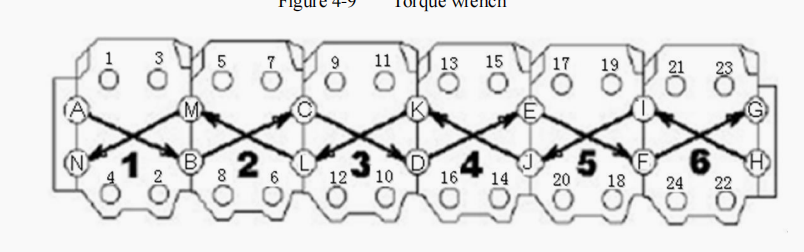
Cylinder Head Bolt Tightening Procedure
Proper tightening sequence is essential.
Bolt Tightening Guidelines
Lubricate bolt threads and bearing surfaces
Tighten bolts gradually in sequence
Use calibrated torque tools
Typical Tightening Steps
Step 1
Tighten M16 main bolts and M20 auxiliary bolts to 80 N·m.
Step 2
Rotate bolts by 45° ±5°.
Step 3
Rotate bolts another 45° ±5°.
Step 4
Perform final angle tightening according to manufacturer specifications.
Important Note
Cylinder head bolts can generally be reused a maximum of three times. Replace bolts after reaching the reuse limit.
Valve Stem Oil Seal Maintenance
Valve stem oil seals prevent engine oil from entering the combustion chamber.
Oil Seal Removal
Use dedicated tools to remove seals gently without deforming them.
Oil Seal Inspection
Inspect for:
Rubber lip damage
Spring breakage
Hardening
Wear
Oil Seal Installation
During installation:
Always use new seals
Lubricate seal lips
Use proper installation tools
Avoid excessive force
Reusing old oil seals is not recommended.
Important Diesel Engine Cylinder Head Maintenance Tips
1. Mark Components Clearly
Always label:
Cylinder heads
Gaskets
Valves
Injectors
This improves assembly accuracy and troubleshooting efficiency.
2. Follow Proper Tightening Sequence
Incorrect bolt tightening may cause:
Cylinder head deformation
Seal failure
Bolt breakage
3. Replace Disposable Sealing Components
Always replace:
Cylinder head gaskets
Valve stem oil seals
Never reuse old sealing parts.
4. Maintain Clean Working Conditions
Dust and debris entering engine components can accelerate wear and reduce engine lifespan.
5. Protect Precision Components
Handle injectors, valves and sealing surfaces carefully during maintenance to prevent scratches and impact damage.
Conclusion
Diesel engine cylinder head maintenance is essential for ensuring engine reliability, performance and service life. Following proper disassembly, inspection, repair and assembly procedures can effectively reduce engine failures and maintenance costs.
By applying standardized maintenance practices, technicians can improve diesel engine efficiency, prevent hidden faults and ensure long-term stable operation of heavy equipment and industrial diesel engines.
Популярные товары
Последние новости

Авторское право ©2024 Все права защищены Shandong Hongfan Power Technology Co.,Ltd